


DigitaLang – Digitalisation as a Language Learning Tool for Migrant Students
International House Bratislava is proud to coordinate the DigitaLang project, which promotes innovative language learning for migrant students through digital tools, microlearning, and gamification. Project title: DigitaLang – Using Digitalisation as a Tool for Language Learning among Migrant Students
Reference number: 2025-1-SK01-KA220-SCH-000352470
Action type & Programme: KA220-SCH – Cooperation Partnerships in School Education, Erasmus+
National Agency: SK01 – Slovak Academic Association for International Cooperation
Erasmus+ Results Platform: coming soon
Website: coming soon

Main Objectives:
- Strengthen language education in schools with the help of gamification and microlearning.
- Support students and teachers in developing both digital and linguistic skills.
- Build an engaging and inclusive digital environment that encourages playful and accessible language learning.
- Help teachers adopt innovative teaching methods that align with European educational goals.
Digital Language Learning Takes Off: DigitaLang Kick-off in Bratislava
 The DigitaLang (Project K220) kick-off meeting took place on 11–12 December 2025 in Bratislava. The team aligned on goals, milestones, roles, and timelines, and launched initial tasks.
Work Packages:
- WP1 – Project Management: Coordination, monitoring, evaluation, and risk management of the project.
- WP2 – “RESOURCE.IN”: Creation of modular microlearning lessons available in English, Italian, Hungarian, and Spanish.
- WP3 – “DIGIT”: Building a user-friendly digital gaming platform hosting all the learning materials.
- WP4 – “GAME IN ACTION”: Communication, dissemination, and impact maximization through strategies and networking.
Key Activities:
- Joint development of microlearning content for learners aged 10–14.
- Creation of a gamified digital learning tool.
- Training teachers to effectively apply digital and gamified practices.
- Testing the material and platform at schools in partner countries.
- Dissemination through events, newsletters, and online promotion.
- Gathering feedback from users and assessing impact.
Expected Results:
- A broad collection of digital microlearning resources in four languages.
- A gamified educational platform improving student motivation and learning outcomes.
- Enhanced digital teaching competences.
- Strengthened international cooperation between educational institutions.
- Evidence of improved student engagement and achievement.
- A sustainable European network encouraging inclusive and digital language learning.
Consortium:
Coordinator:
International House Bratislava, s.r.o. (Slovakia)
Partners:
- Agrupamento de Escolas do Barreiro (Portugal)
- Agrupamento de Escolas de Ideas (Portugal)
- Hilstad barne- og ungdomsskole (Norway)
- Regional Centre for Information and Scientific Development Ltd. (Hungary)
- “Microkosmos” Associazione Culturale Italo-Ellenica per la Formazione (Italy)
- Federatia Organizatiilor Neguvernamentale Pentru Servicii Sociale – FONSS (Romania)

Previous Erasmus+ projects
We are excited that our teachers can benefit from the grant programme of the European Union Erasmus+ and gain international experience through it, as well as improving methods of teaching and management and obtaining an attractive portfolio of opportunities for teachers.
Key activity 1 (KA1) Individual Mobility supports the mobility of employees – offers opportunities to teachers to gain experience with studying or working abroad.
Our school takes part in employee mobility in school education as well as in adult education. The activities include one or more of the following activities:
The programme offers the participants professional development, which increases the quality of education provision for our pupils and students.
Blogs:
Key activity 1 (KA1) Individual Mobility supports the mobility of employees – offers opportunities to teachers to gain experience with studying or working abroad.
Our school takes part in employee mobility in school education as well as in adult education. The activities include one or more of the following activities:
- Structured courses – support the expert development of teachers or school management,
- Job Shadowing -Offers teachers or school management members the chance to spend time observing the work in a partner school abroad.
The programme offers the participants professional development, which increases the quality of education provision for our pupils and students.
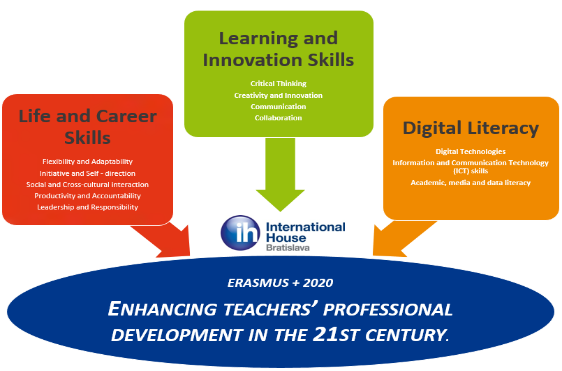
Erasmus 2020 - KA104
year 2020
Name: Zvyšovanie profesionálneho rozvoja učiteľov v 21. storočí
Number of project: 2020-1-SK01-KA104-078050
Duration: 01. 9. 2020 until 31. 8. 2022 (prolonged)
Donor: SAAIC - Národná agentúra programu Erasmus+ pre vzdelávanie a odbornú prípravu
Name: Cesta európskej spolupráce
Number of project: 2019-1-SK01-KA104-060251
Duration: 01. 06. 2019 until 30. 09. 2020
Donor: SAAIC - Národná agentúra programu Erasmus+ pre vzdelávanie a odbornú prípravu
Outcomes:
Name: Zvyšovanie profesionálneho rozvoja učiteľov v 21. storočí
Number of project: 2020-1-SK01-KA104-078050
Duration: 01. 9. 2020 until 31. 8. 2022 (prolonged)
Donor: SAAIC - Národná agentúra programu Erasmus+ pre vzdelávanie a odbornú prípravu
- DELTA Module 1
- DELTA Module 2
- CELTA
- Develop your First Self-Paced Online Course
- IH Roma - job shadowing 1, job shadowing 2
- ICT Tools for a Creative and Collaborative Classroom
- ICT as a Tool for Student Centered Classroom
- Digital Marketing Training for Educational Staff
- Life Coaching for Teachers
- Discussion Tools for Teaching and Learning
- Soft Skills and Emotional Intelligence for teachers and education staff
- Innovations in Language Teaching Methodology
- 21st Century & Approach to Adult education
- Towards E-learning Online Course Development
- Educational Management & School Leadership
Erasmus 2020 - KA101
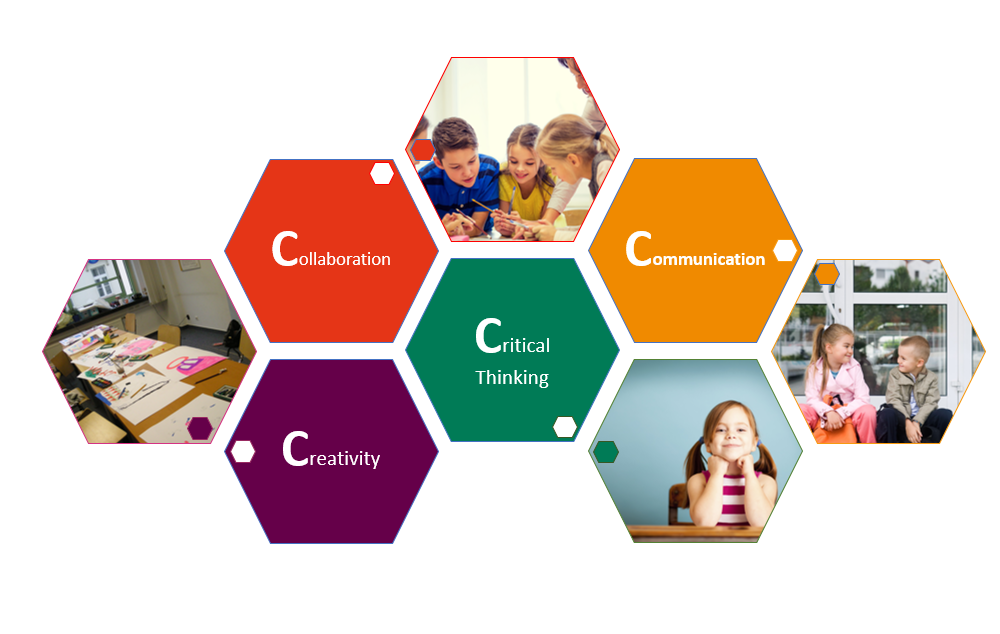
Name: Byť pripravený učiť deti v 21. storočí. 4 „K“ pre výnimočné vyučovanie
Number of project: 2020-1-SK01- KA101-078048
Duration: 01. 9. 2020 do 31. 8. 2022
Donor: SAAIC - Národná agentúra programu Erasmus+ pre vzdelávanie a odbornú prípravu.
Number of participants: 13
Outcomes:
Number of project: 2020-1-SK01- KA101-078048
Duration: 01. 9. 2020 do 31. 8. 2022
Donor: SAAIC - Národná agentúra programu Erasmus+ pre vzdelávanie a odbornú prípravu.
Number of participants: 13
Outcomes:
- Introducing Project Based Learning in the Classroom
- A Project Management System for a Better Quality of Teaching – Barcelona
- Content and Language Integrated Learning (CLIL) and Digital Based Learning – Barcelona
- Digital Games and Story Telling- Paris
- Student-centered Classroom: Teachers as Promoters of Active Learning! – Dublin
- BUILDING A POSITIVE LEARNING ENVIRONMENT- Classroom management, communication skills, effective teaching and learning (6-day)- Cyprus
- Audio-visuals and Social Media – Barcelona -2 Week Course
- Motivation+ in Sevilla, Spain
- Soft Skills for Strong Teacher- Dublin
- Applying non-formal education in schools and adult education organizations
- Teach With a Twist! Motivate you Students with Creative Teaching Strategies
- Innovative approaches to teaching - Praha
- Stress Management and Burnout Prevention - Split
- Learn to Teach English and any Subject with Drama - Amsterdam
Erasmus 2019 & 2018
Year 2019Name: Cesta európskej spolupráce
Number of project: 2019-1-SK01-KA104-060251
Duration: 01. 06. 2019 until 30. 09. 2020
Donor: SAAIC - Národná agentúra programu Erasmus+ pre vzdelávanie a odbornú prípravu
Outcomes:
- mobility of 8 teachers
- jobshadowing of 2 managers
- opening of CELTA centre in Slovakia - training of 2 tutors
Blogs: